
Parkening Plays Bach
Revisiting a classic from the classical guitar's back catalogue

As I develop the material for Season 1 of Classical Guitar Dispatch, I’ll share bits and pieces from the show. Here’s a little tribute to my favorite album by Christopher Parkening, from an episode called “Finding Salvation at the Bottom of a Banana Box.”
Parkening Plays Bach was released by Angel Records, a Columbia subsidiary, in 1972. Christopher Parkening was in his mid-20s and had already recorded three other albums for the label. His playing is confident and mature, and there’s a freshness to his interpretations that is unusual for classical guitar records of that time period. The looming, grandfatherly presence of the era’s dominant guitar figure, Andres Segovia, is barely detectable. Parkening places Bach’s melodic material squarely on the beat, and doesn’t go ham with the rolled chords and swooping portamenti that permeate Segovia’s 1969 Bach album. The influence of John Williams—six years Parkening’s senior and a fellow star pupil in the Segovia lineage—is far more apparent. The Williams influence is particularly present in Parkening’s sound, which is warm yet direct. That’s thanks in part to the 1967 cedar-top MT Ramirez guitar he plays on the record, which is currently on display to be seen but not heard at the Metropolitan Museum of Art.
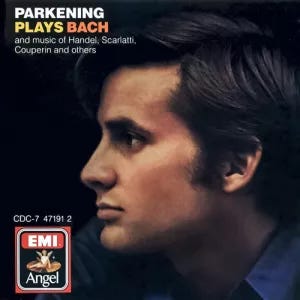
For me, the standout track on the album is Rick Foster’s arrangement of “Jesu, Joy of Man’s Desiring,” from Cantata BWV 147. It’s a deceptively tricky arrangement. Foster set the material in the key of C, which limits the availability of open bass strings, so producing any semblance of legato requires prolonged contact with the fretboard. So, by the first repeat of the A section, the left hand is pooped, and there are still two minutes to go in the piece. Parkening makes tidy work of Foster’s arrangement, and considering they were cutting the record onto two-inch magnetic tape controlled by massive reel-to-reel machine heads, I can’t imagine there were many edits in those sessions.
The Artistry of Parkening was the second classical guitar CD that I purchased shortly after I started playing. I listened to it religiously and that compilation remains one of my favorite recordings. I know that some guitarists have very particular attitudes about Parkening these days but those early recordings, in my opinion, demonstrate the beautiful possibility of phrasing and tone colors on the guitar.
What’s your favorite Parkening album?